Short answer: Panama real estate investment can make sense for US buyers who want a dollar-based market, titled ownership on the same terms as Panamanians, and a home they can also use themselves. It is not a guaranteed return. The result depends on location, the developer, the contract, holding costs, and whether your goal is personal use, rental income, residency, or long-term value.
Panama real estate investment has moved from a niche idea to a serious option for Americans who want a second home or a foothold outside the US. The country uses the US dollar, has a large international airport, and lets foreigners own titled property. But the details matter far more than the headlines. This guide covers what US buyers should weigh before committing: ownership rules, the full cost of owning, pre-construction versus resale, residency options, and the neighbourhoods we know best in Panama City.
Is Panama real estate a good investment?
It can be, for the right buyer and the right property. Panama suits buyers who plan to hold for several years, want a residence they will actually use, and are comfortable doing proper due diligence in another country. It suits short-term flippers less, because buying and selling costs, plus the time it can take to resell, eat into quick gains.
The strongest purchases usually share four traits: a location people already want to live in, a developer with a delivery record, a clear contract with protected payments, and running costs you have budgeted for in advance. Nobody can promise appreciation or rental income, so treat any projected return as a scenario to test, not a figure to rely on.
Panama real estate investment at a glance
| Factor | What it means for a US buyer | What to check |
|---|---|---|
| Currency | The US dollar is legal tender, used alongside the balboa at 1:1 | No exchange-rate risk on the purchase itself |
| Ownership | Foreigners can hold titled property like Panamanians | Title in the Public Registry, no liens |
| Restricted land | Foreigners cannot own land within 10 km of national borders | Not an issue for Panama City condos |
| Buying taxes | 2% transfer tax on the sale, usually handled by the seller | Who pays what is written in the contract |
| Annual property tax | Tiered; a registered primary residence gets an exemption on the first $120,000 | Registration and the property’s assessed value |
| Rental income | Rent from a Panama property is Panama-source income and taxable there | Building rules and rental permissions |
| Residency | Some visas accept titled real estate as the qualifying investment | Current rules with an immigration attorney |
| Exit | Resale can take time, depending on the building and price point | Comparable listings and resale history |
Why US buyers are looking at Panama
No currency conversion on the purchase
Panama adopted the US dollar soon after independence, and the dollar is legal tender alongside the balboa. You price, pay, and budget in dollars, which removes one layer of risk that comes with buying in most other countries.
Easy to reach from the US
Panama City’s Tocumen International Airport is a regional hub with direct flights to many US cities. That matters more than it sounds: a home you can reach easily is a home you will actually use, and it keeps future buyers and renters interested. Both of our projects are roughly a 20 to 25 minute drive from Tocumen.
Healthcare and city services
Panama City has private hospitals used by expats and medical travellers. Pacífica Salud Hospital Punta Pacífica is affiliated with Johns Hopkins Medicine International. Good healthcare nearby is one reason many retirees and part-time residents consider the city.
City and waterfront in one place
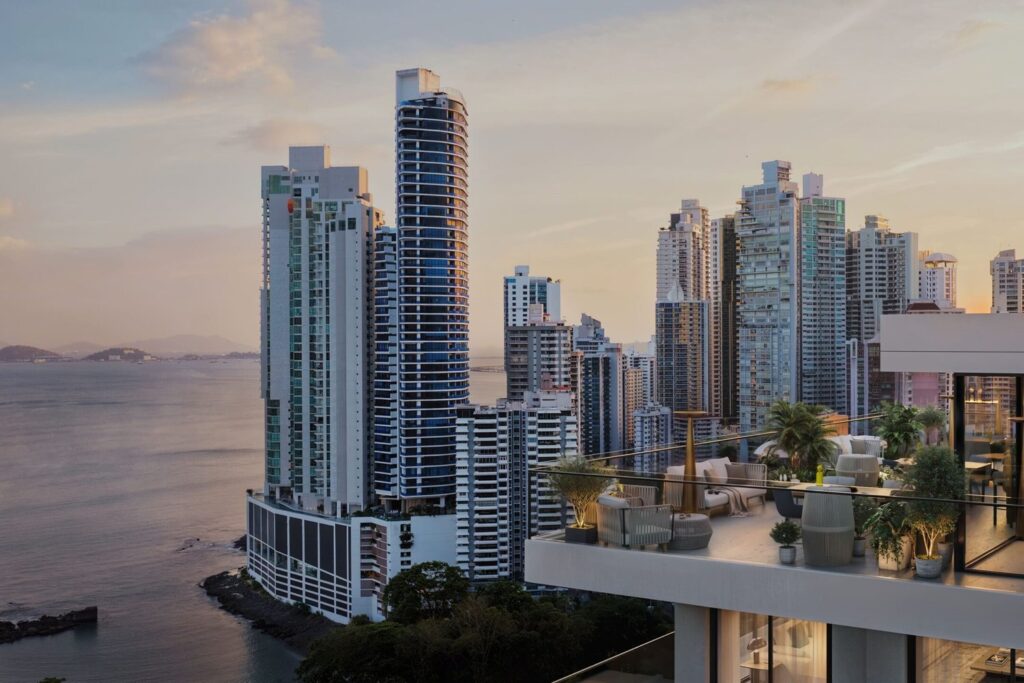
Within a short drive you can move from the banking district to the historic streets of Casco Viejo or the Amador Causeway on the water. Buyers can choose a lifestyle, not just a building. Our guide to moving to Panama covers daily life in more depth.
Can foreigners own property in Panama?
Yes. Panama’s constitution guarantees private property, and foreigners can generally own titled real estate on the same terms as Panamanian citizens. The main restriction is that foreign individuals and foreign-owned companies cannot acquire land within 10 kilometres of the country’s borders, which does not affect city apartments.
Two types of holding come up often:
- Titled property: registered in Panama’s Public Registry with full ownership rights. Condos in Panama City are titled property.
- Rights of Possession (ROP): a weaker form of holding found mainly on some beach and rural land. It is not full title and needs extra legal care.
Many buyers hold property personally, while others use a Panamanian company or private interest foundation for estate planning. Which route suits you is a question for a Panamanian attorney and your US tax adviser.
The real cost of owning: budget beyond the price
The purchase price is only part of a Panama real estate investment. Here is what to plan for.
| Cost | When it applies | Notes |
|---|---|---|
| Transfer tax (2%) | At the transfer of title | Calculated on the higher of the sale price or the registered value; usually the seller’s cost, but confirm it in the contract |
| Legal and closing fees | At purchase | Attorney review, registration and notary costs |
| Annual property tax | Every year after title | Tiered rates; primary residence registration can exempt the first $120,000 under Law 66 of 2017 |
| HOA or maintenance fees | Monthly | Covers amenities, security and building upkeep; ask for the current budget |
| Property management | If you rent it out | Fees for cleaning, guest handling and upkeep |
| Insurance | Yearly | Contents and liability cover for your unit |
| Tax on rental income | If you rent it out | Rent from Panama property is taxed in Panama; ask your US adviser about reporting at home |
Ask the developer or seller for the expected monthly fees in writing before you commit. A clear cost picture is what separates a confident purchase from an expensive surprise.
Pre-construction or resale?
Most new luxury residences in Panama City are sold before or during construction. Both routes can work. They carry different risks.
| Pre-construction | Resale | |
|---|---|---|
| What you get | A new unit, often furnished, built to current standards | A finished unit you can inspect today |
| Payment | Deposit at signing, then staged payments, balance at delivery | Full payment at closing |
| Choice | Pick floor, view and layout early | Limited to what is on the market |
| Main risk | Delivery delays and developer performance | Building age, condition and maintenance history |
| Title | Issued after the building is finished and units are registered | Transferred at closing |
| Best for | Buyers planning ahead who can wait for delivery | Buyers who want to use or rent the unit now |
If you buy pre-construction, the contract does the heavy lifting. In Panama, the promise-to-purchase agreement (promesa de compraventa) sets the price, payment schedule, delivery date and the obligations of both sides. Make sure it explains what happens if delivery is late, how your payments are protected (for example through an escrow arrangement or a bank guarantee), and how the final payment is secured.
How to evaluate a Panama real estate investment: 7 steps
1. Define your goal first
Personal use, part-time living, rental income, residency, or long-term value all point to different buildings. A unit that is ideal for a few months a year may not be the best rental, and vice versa. Write down your main goal before you look at floor plans.
2. Choose the neighbourhood before the building
In Panama City, the neighbourhood sets the lifestyle and much of the demand. Amador offers waterfront and canal views near the Causeway. Punta Pacífica offers city living close to healthcare, shopping and the business district. Visit both if you can, or ask for a video walk-through.
3. Check the developer and the project
Ask who is building it, what they have delivered before, the current construction stage, and the expected delivery date. Look at the floor plans and the amenities list, and confirm what is included in a furnished unit.
4. Hire an independent Panamanian attorney
Your attorney should work for you, not the seller. They check title or the developer’s land title, liens, permits and the contract terms, and explain the closing process in plain English.
5. Review the contract and payment protections
Read the payment schedule, delivery date, late-delivery remedies, and what happens to deposits if either side cannot complete. Confirm how your payments are held and when title will be issued.
6. Model the full cost of ownership
Add the transfer and closing costs, annual property tax, HOA fees, insurance and, if you plan to rent, management fees and income tax. Test a few scenarios, including months with no rental income, rather than relying on a single projected return.
7. Plan the residency and tax side
If residency matters, check whether the property will qualify, and when. Ask your US tax adviser how Panama ownership and any rental income will be reported in the US. Then plan your financing, visits and handover date around the delivery timeline.
Can buying property in Panama help with residency?
It can, under some visa programmes. Rules change, so treat this as a starting point and confirm the current requirements with a Panamanian immigration attorney.
- Friendly Nations Visa: the United States is on the list of eligible countries. One route is titled Panamanian real estate with a registered value of at least $200,000.
- Pensionado (retiree) Visa: requires a lifetime pension, normally at least $1,000 a month. That figure drops to $750 a month if you also own Panamanian property bought for more than $100,000.
One detail many buyers miss: these routes generally require titled property. A pre-construction unit may not count until the building is delivered and the title is registered in your name, so plan the timing.
Amador or Punta Pacífica: two ways to invest in Panama City
Panama Lux Living focuses on two projects in two very different parts of the city.
| Nautilus at the Canal | Mantra Punta Pacífica | |
|---|---|---|
| Area | Amador Peninsula, at the entrance to the Panama Canal | Punta Pacífica, Panama City |
| Residences | Fully furnished studio and one-bedroom units | Fully furnished studio and one-bedroom units |
| Setting | Waterfront with canal views, walking distance to the Amador Causeway | City living near Hospital Punta Pacífica and Multiplaza Mall |
| Amenities | Infinity pool, wellness areas, fitness centre, social lounge | Ocean-view infinity pool, spa, rooftop restaurant and bar, co-working space, 24/7 bilingual concierge |
| Airport | About 25 minutes to Tocumen | About 20 minutes to Tocumen |
| Suits | Buyers who want a waterfront, resort-style home | Buyers who want urban convenience and healthcare nearby |
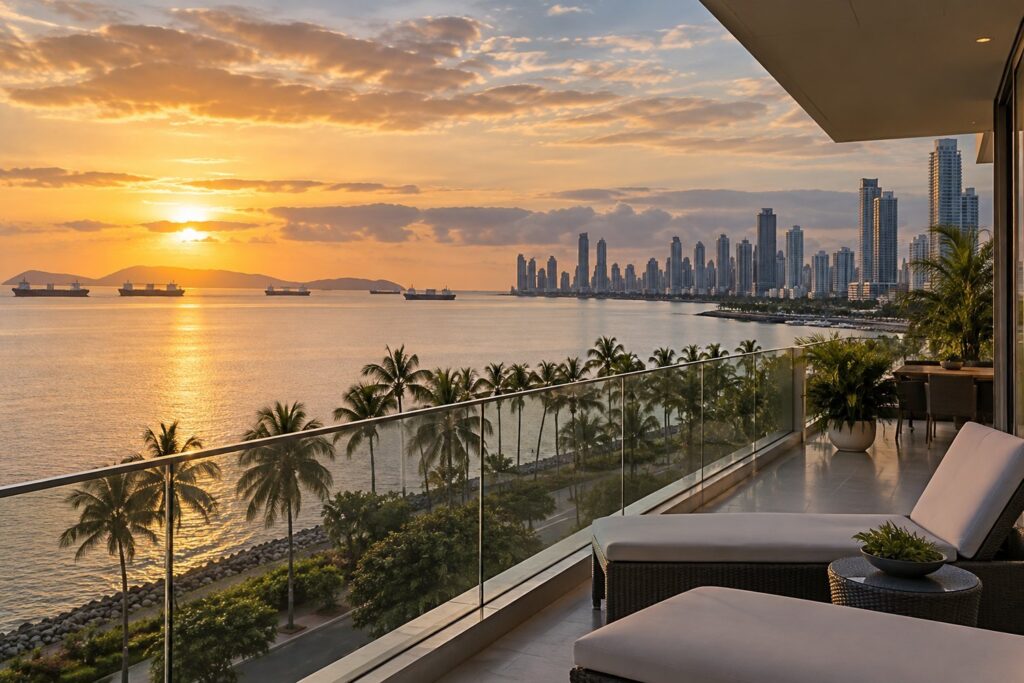
Nautilus at the Canal puts you on the water in Amador, close to the marina, the Causeway and Casco Viejo. Mantra Punta Pacífica puts you in one of the city’s most established residential areas, beside the medical district. Both offer professional management, which matters if you will not live there full time. You can compare floor plans for both on our projects page.
Risks to weigh honestly
A good Panama real estate investment starts with a clear view of what can go wrong:
- Delivery delays: pre-construction timelines can slip, so make sure the contract deals with delays.
- Liquidity: reselling in another country can take longer than at home, so plan to hold.
- Rental performance: occupancy and rates move with the market, the season and the building’s rules. No one can guarantee them.
- Running costs: HOA fees and taxes can rise, so ask for history where it exists.
- Rules change: visa and tax rules are updated from time to time. Re-check them before you sign.
None of these is a reason to avoid Panama. They are the reasons to buy carefully, with good advice and a contract that protects you.
Talk to our team about Panama real estate investment
If you are weighing a Panama real estate investment, our team can walk you through both projects, the floor plans, and the buying process step by step. Our US sales office is at 8100 Oak Lane #405, Miami Lakes, FL 33016, and you can reach us on (786) 755-0332 or through our contact page.
This article is general information, not legal, tax or investment advice. Rules and costs change, so confirm the details with qualified professionals before you buy.